
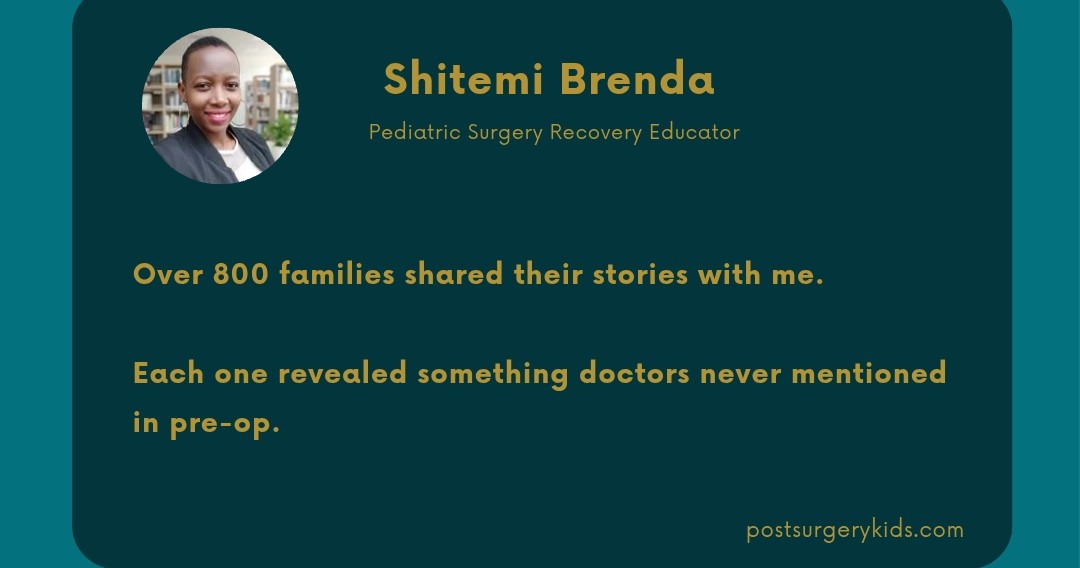
A mother’s four-year lived truth
They told me the surgery was necessary.
They told me it would save my son’s life.
And for that, I will always be grateful—because they were right.
It did.
They also told me recovery would take a few weeks.
Maybe two months.
What they didn’t tell me is that it could last this long.
It has been four years.
And we are still fighting.
My son swallowed a wristwatch battery when he was just a baby.
Surgeons opened him up, saved his life, and placed a gastrostomy tube.
There was nothing easy about signing those consent forms.
- my hands were shaking.
- my mind raced ahead to funerals I refused to imagine.
Four years later, my son still lives with dysphagia.
- he drools constantly.
- he can’t swallow most foods.
- he sleeps beside me with his mouth open, saliva pooling through the night.
– this is the same child who still presses his body into mine for safety,
– the same child who believes, without question, that his mother can make things better.
My bed smells like something I can’t describe gently.
And for the first time in my life, love isn’t enough to fix it.
Most medical websites say dysphagia resolves in weeks.
Specialists say be patient.
But in my house, four years later, we are still negotiating every meal.
“Soft foods” didn’t mean temporary;
- It meant years of vigilance.
- It meant inspecting pancake edges like a bomb disposal expert.
- It meant making up songs just to get three spoonfuls of soup into his mouth.
Every single day.
I signed a consent form for throat surgery.
Nobody mentioned my child might stop being the child I knew.
What I didn’t understand then, but learned through more than 800 conversations with parents, caregivers, and educators; is that surgery doesn’t only change a body.
It quietly changes a child’s relationship with the world.
The Three Hidden Impacts No One Warns Parents About
1. Anesthesia aftermath
Children’s nervous systems process anesthesia differently than adults’.The effects don’t always show up immediately.
Sometimes they appear weeks later as;
- sleep disruption,
- emotional regression,
- or behavioral changes.
There is no universal timeline.
Two weeks for some.
Twelve months, or longer for others.
2. Pain that speaks through behavior
Children don’t always say, “I’m in pain.”
- They withdraw.
- They act out.
- They seem difficult.
They look fine.
They are not.
3. Identity disruption
Surgery removes control.
Behavioral changes are often a child’s attempt to regain it.
What looks like defiance is often fear.
A kindergarten teacher with twenty-five years of experience recently told me;
“I can spot the post-surgical kids now. They come back different. It takes two to three months for the old personality to return, and some parents are never warned.”
That sentence still lives with me.
The specialists don’t see my son hiding his surgical scar.
He refuses to let even his sister see his stomach.
- specialist don’t see how trauma lives in his body,
- how hard foods now feel “dangerous” to him.
Hear this;
- he won’t try nuts.
- he won’t touch sweet corn.
- he avoids anything that once hurt him completely.
This is the truth no one prepares you for:
The surgery is the easy part.
The hard part happens at home.
- in the dark.
- at the table.
- inside a child who no longer trusts their own body.
I am a single mother.
A college dropout.
The kind of woman society often assumes has no authority to speak.
But here is what I know, what discharge papers don’t explain and textbooks don’t include:
- I know the smell.
- I know the fear.
- I know the exhaustion that makes you question whether you made the right decision.
- I know the guilt that eats at you when someone suggests your child’s suffering is your fault.
- And I know what it takes to fight when the world assumes you are unqualified to have an opinion.
I am an expert in post-pediatric throat surgery recovery.
Not because I studied it.
Not because I read about it.
But because I have lived it.
Because my son is living it.
Because four years later, we are still here.
- Still fighting.
- Still learning.
- Still winning.
My son tells me, “I love you, Mama,” every day.
- despite the tubes.
- despite the scars.
- despite the food battles and sleepless nights.
He still trusts me completely.
If you are reading this at 3 a.m., Googling “when does dysphagia get better” while your child finally sleeps,
know this:
You are not failing.
The timeline they gave you was wrong.
But your strength is not.
You will learn to read your child like a language only you speak.
You will develop patience that could move mountains.
And above all, you are not alone.
This is the reality they do not put in the discharge papers.
This is what recovery actually looks like.
And it is time we stopped pretending pediatric surgery recovery is easy.
Because it isn’t.
Parents deserve the truth.